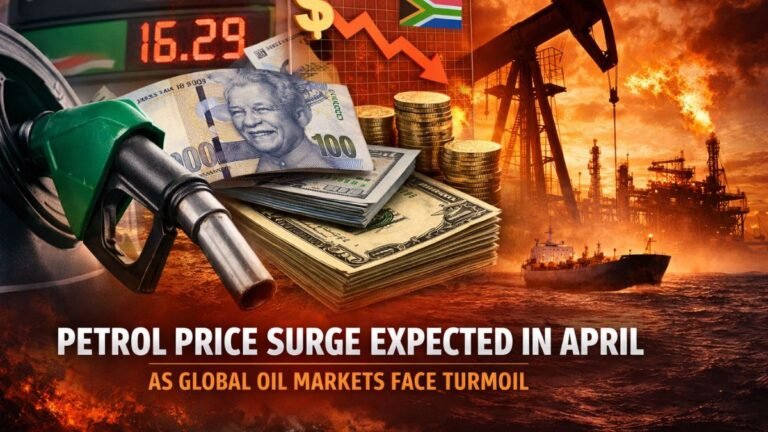
Global energy markets have been thrown into chaos following escalating tensions in the Middle East, sending oil prices sharply higher.
This sudden spike is now expected to significantly impact fuel costs in South Africa, with projections indicating an increase of more than R5 per litre of petrol in April.

The combination of geopolitical instability and currency weakness is creating a perfect storm for motorists and households alike.
Middle East Conflict Pushes Oil Prices Higher
The recent surge in oil prices is largely driven by renewed conflict in the Middle East. Attacks linked to Iran, along with earlier strikes associated with Israel, have disrupted critical energy infrastructure.
Key incidents include:
- Damage to Iran’s South Pars gas field, one of the world’s largest
- Missile strikes on Ras Laffan Industrial City in Qatar, a major LNG hub
- Drone attacks targeting oil facilities in Saudi Arabia
- Fires reported at energy sites in Kuwait

These events have heightened fears of supply disruptions, particularly around the Strait of Hormuz, a vital route for global oil shipments.
As a result, Brent crude prices surged past $115 per barrel, reflecting growing uncertainty in global energy supply.
Fuel Price Pressure Mounts in South Africa
South Africa is already feeling the effects of rising global oil prices. According to data from the Central Energy Fund (CEF), mid-March figures show significant under-recoveries in fuel pricing.

Current projections suggest:
- Petrol could increase by up to R5.20 per litre
- Diesel may rise by approximately R8.64 per litre
These increases indicate strong upward pressure on fuel prices for April, especially if current market conditions persist.
Rand Weakness Adds to the Burden
In addition to rising global oil prices, the rand’s weakness against the U.S. dollar is worsening the situation. Since South Africa imports most of its fuel, the exchange rate plays a crucial role in determining local fuel prices.
Two main factors influence fuel costs:
- International oil prices
- Rand-to-dollar exchange rate
With the rand trading around R16.76 per dollar, fuel imports become more expensive, further driving up pump prices.
Latest Fuel Price Projections for April
Based on the latest available data, the following increases are expected if trends continue:
- Petrol 93: increase of 468 cents per litre
- Petrol 95: increase of 520 cents per litre
- Diesel (0.05%): increase of 852 cents per litre
- Diesel (0.005%): increase of 864 cents per litre
- Illuminating paraffin: increase of 1 058 cents per litre
These projections highlight the severity of the current situation, although final prices will depend on market conditions in the coming weeks.
Current Fuel Prices (March 2026)
Inland Prices:
- Petrol 93: R20.19
- Petrol 95: R20.30
- Diesel 0.05%: R18.53
- Diesel 0.005%: R18.60
- Paraffin: R12.54
Coastal Prices:
- Petrol 93: R19.40
- Petrol 95: R19.47
- Diesel 0.05%: R17.70
- Diesel 0.005%: R17.84
- Paraffin: R11.52
Inflation Concerns on the Rise
Higher fuel prices are expected to ripple through the broader economy. Increased transport and logistics costs typically lead to higher prices for goods and services.
Oil prices have risen dramatically—from below $60 per barrel earlier this year to well above $100—highlighting the scale of the current disruption. This trend raises concerns about rising inflation and reduced purchasing power for consumers.
What Lies Ahead for Motorists
If geopolitical tensions continue, South African motorists may face sustained high fuel prices in the coming months. The combination of global instability and domestic economic pressures suggests that relief is unlikely in the short term.
The final fuel price adjustments will be confirmed later in the month, with changes expected to take effect in early April.
South Africa is heading toward a significant fuel price shock as global oil markets react to escalating conflict in the Middle East.
With petrol prices potentially rising by more than R5 per litre, households and businesses alike will feel the strain. The dual impact of rising oil prices and a weakening rand is amplifying the الأزمة, making the outlook increasingly challenging.
Unless global tensions ease and currency stability improves, motorists should prepare for higher costs and tighter budgets in the months ahead.