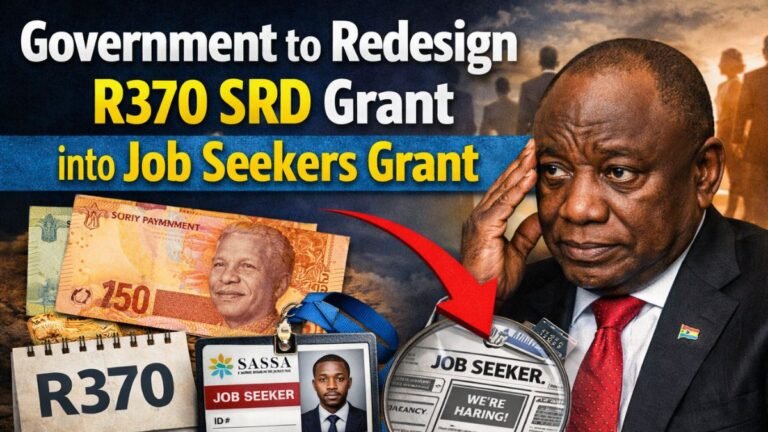
South Africa is preparing for a major transformation in its social support system, as the R370 Social Relief of Distress (SRD) grant is set to evolve into a job seeker’s grant.
President Cyril Ramaphosa confirmed this development during a national summit, outlining plans to reshape the grant into a long-term support mechanism tied to employment opportunities.


This move is part of a broader strategy to introduce a Basic Income Support (BIS) system aimed at helping unemployed citizens transition into sustainable livelihoods.
Why the SRD Grant Is Being Redesigned
The SRD grant was initially introduced as a temporary relief measure during economic hardship. However, with unemployment remaining a persistent challenge, the government is now shifting its focus toward a more structured and long-term solution.
According to Ramaphosa, the redesigned grant will not just provide financial support but also:
- Help beneficiaries actively search for employment
- Provide access to skills training and development
- Support pathways into entrepreneurship and income generation

The goal is to ensure that social assistance becomes a stepping stone toward financial independence rather than a permanent dependency.
What Is the New Basic Income Support (BIS) System?
The Basic Income Support (BIS) system will use the current SRD grant as its foundation but expand its scope significantly.
Under the proposed model:
- The R370 grant will remain the base payment
- Beneficiaries aged 18 to 59 will be targeted
- The system will integrate job placement services, training programmes, and business support

Government officials believe that linking financial aid to economic opportunities will improve long-term outcomes for recipients.
Research cited by the Department of Social Development suggests that individuals who receive both financial support and access to opportunities are more likely to improve their living conditions over time.
Timeline: When Will the Changes Take Effect?
The transition to the new system will not happen overnight. The SRD grant has already been extended until March 2027, ensuring continued support while the new structure is developed.
Key milestones include:
- March 2026: Consultations between the Department of Social Development and National Treasury begin
- 2026–2027: Policy refinement and funding alignment
- Post-2027: Expected rollout of the redesigned job seeker’s grant under the BIS system
The policy is currently at an advanced stage, with draft documents already reviewed and costed.
Government’s Role in Finalising the Plan
The Presidency is playing a central role in coordinating the final stages of the reform. Working alongside the Department of Social Development, the government aims to complete consultations and finalise the framework within a tight timeline.
The involvement of multiple departments ensures that:
- The system is financially sustainable
- It aligns with broader economic and employment strategies
- Implementation is efficient and scalable
This collaborative approach signals that the reform is a high priority for the government.
What This Means for Beneficiaries
For current SRD recipients, the changes could bring both opportunities and adjustments.
Potential Benefits:
- Greater access to job opportunities and training
- Improved chances of long-term financial stability
- Continued financial support during the transition period
Possible Challenges:
- Increased expectations to participate in job-seeking activities
- Adjustments to eligibility or participation requirements
Overall, the shift represents a move toward a more active support system, where beneficiaries are encouraged to engage with economic opportunities.
The transformation of the R370 SRD grant into a job seeker’s grant under the Basic Income Support system marks a significant shift in South Africa’s social welfare approach. By combining financial assistance with employment support, the government aims to tackle unemployment while maintaining a safety net for vulnerable citizens.
While the full rollout is still in progress, the direction is clear: future social grants will focus not just on relief, but on empowerment and economic participation. For beneficiaries, staying informed and prepared for these changes will be essential in making the most of the new system.
FAQs
1. What will replace the R370 SRD grant?
The SRD grant will be redesigned into a job seeker’s grant as part of the new Basic Income Support system.
2. When will the new grant system start?
The SRD grant will continue until March 2027, with the redesigned system expected to roll out afterward.
3. Who will qualify for the new grant?
The new system is expected to target unemployed individuals aged 18 to 59, with added support for job searching and training