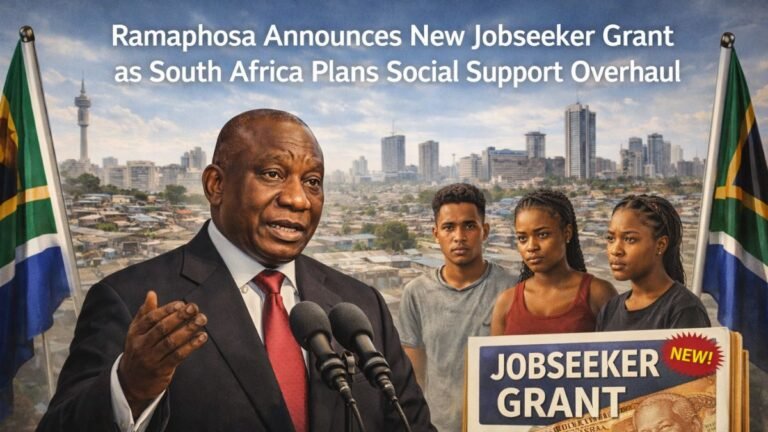
President Cyril Ramaphosa has confirmed a major shift in South Africa’s social welfare system, announcing that the upcoming Basic Income Support (BIS) grant will be structured as a jobseeker’s grant.
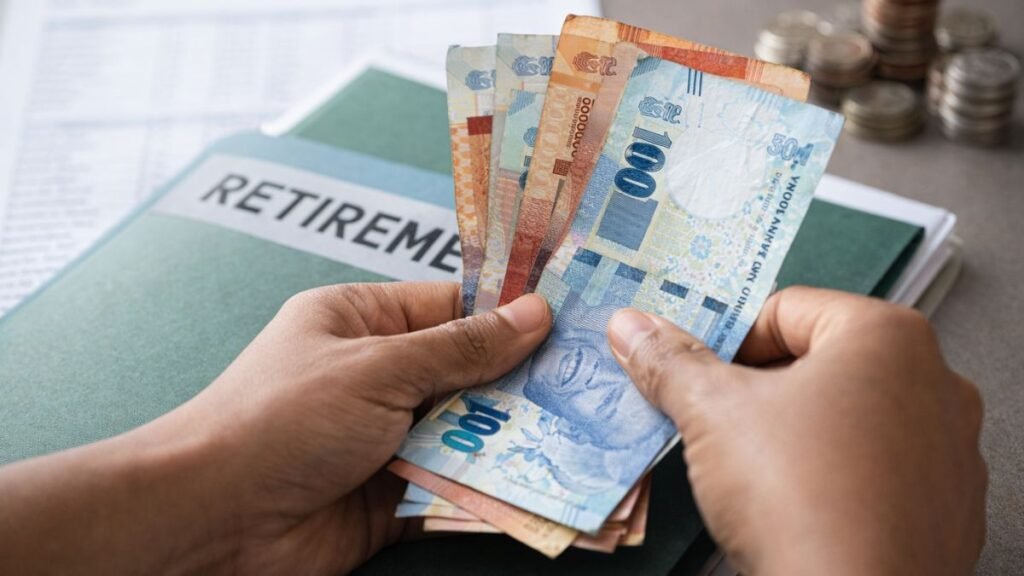
This new initiative will replace and expand the current R370 Social Relief of Distress (SRD) grant, aiming to provide more sustainable support to unemployed citizens.
A New Direction for Social Grants

Speaking at the News24 On the Record Summit on March 19, President Ramaphosa outlined the government’s plans to redesign the SRD grant into a more comprehensive support system.
The SRD grant, initially introduced as a temporary relief measure, has now been extended until March 2027. However, the government plans to fully transform it into the Basic Income Support (BIS) grant by 2026.
The key change is that the new grant will not only provide financial aid but will also actively support recipients in finding employment.
What Is the New Jobseeker Grant?

The redesigned BIS grant will function as a jobseeker’s grant, meaning it will go beyond basic financial assistance.
According to Ramaphosa:
- Beneficiaries will receive support to search for jobs
- The grant will help individuals build sustainable livelihoods
- It will form part of a broader strategy to strengthen South Africa’s social protection system
This marks a shift from passive assistance to a more active, opportunity-based support model.
Linking Grants to Employment Opportunities
The Department of Social Development (DSD) has confirmed that the new BIS grant will focus on connecting recipients to economic opportunities.
The plan includes linking beneficiaries aged 18 to 59 with:
- Job opportunities
- Skills training programs
- Entrepreneurial support
The government believes that integrating social assistance with employment pathways will improve long-term outcomes.
According to the DSD, evidence shows that individuals who receive both financial support and access to economic opportunities are more likely to improve their livelihoods.
Economic Challenges Driving the Reform
Ramaphosa highlighted that global economic pressures are influencing South Africa’s policy decisions.
These include:
- Ongoing conflicts in the Middle East
- Rising global economic uncertainty
- Increased pressure on developing economies
Despite these challenges, the president noted some positive developments:
- South Africa has achieved a primary budget surplus for three consecutive years
- The Youth Employment Service has provided work opportunities to over 220,000 young people
These efforts are part of a broader strategy to address unemployment and economic inequality.
Funding Remains a Key Challenge
One of the biggest obstacles facing the new BIS grant is funding.
The DSD has already:
- Completed the re-costing of the policy
- Included it in a draft framework
However, consultations with the National Treasury are ongoing to determine how the grant will be financed sustainably.
These discussions are expected to take place throughout March 2026, with the goal of finalizing the policy soon.
What Happens Next?
The government is currently:
- Testing macroeconomic models for long-term sustainability
- Conducting consultations with key stakeholders
- Refining the policy framework
With support from the Presidency, the DSD aims to finalize the BIS policy before the end of the consultation period.
If successful, the new jobseeker grant could become a permanent feature of South Africa’s social support system.
The introduction of the Basic Income Support grant as a jobseeker-focused initiative represents a significant evolution in South Africa’s approach to social welfare.
By combining financial assistance with employment opportunities, the government aims to create a more sustainable and empowering system for unemployed citizens.
However, the success of this reform will depend heavily on securing adequate funding and effective implementation.
If executed well, the new grant could play a crucial role in reducing unemployment and improving economic resilience across the country.
FAQs
1. What will replace the SRD grant?
The SRD grant will be replaced by the Basic Income Support (BIS) grant, designed as a jobseeker’s grant.
2. Who will qualify for the new grant?
It is expected to target unemployed South Africans aged 18 to 59, with additional criteria to be finalized.
3. When will the new grant be introduced?
The BIS grant is expected to be implemented in 2026, following policy finalization and funding approval.