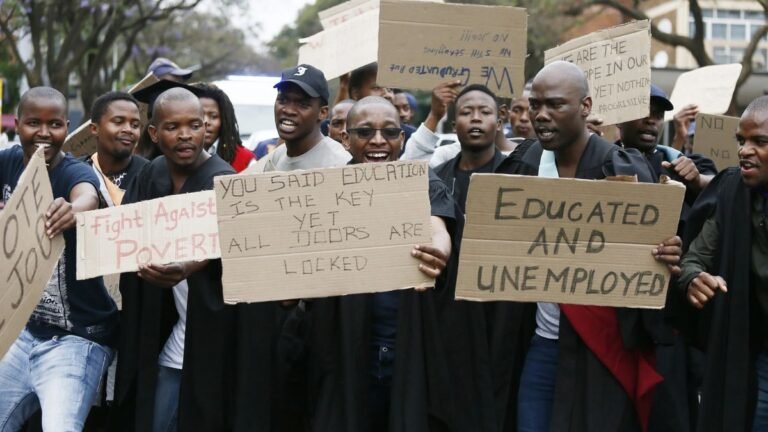
South Africa’s unemployment crisis remains one of the most pressing challenges facing the nation. Despite ambitious promises to create five million jobs over the next decade, many experts argue that this target fails to reflect the true scale of the problem.
Recent discussions at major economic forums, including high-level policy summits, highlight a growing disconnect between official targets and the harsh reality experienced by millions of unemployed South Africans.
Understanding the Scale of Unemployment

Unemployment in South Africa is not just high—it is structurally entrenched. With an estimated 12.4 million people unemployed, the crisis extends far beyond what current job creation targets can address.
The proposed goal of five million jobs over ten years may sound ambitious, but it falls short when considering the continuous growth of the labour force. Each year, hundreds of thousands of new job seekers enter the market, increasing the pressure on an already strained economy.
Why the 5 Million Jobs Target Falls Short
A closer look at the numbers reveals a critical flaw in the current strategy. Over the next decade, South Africa’s labour force is expected to grow significantly, with approximately 7.5 million new entrants joining the workforce.

The current target aims to create around 500,000 jobs per year, which is insufficient to absorb the estimated 754,000 new entrants annually. This gap means that even if the target is achieved, unemployment levels could continue to rise.
Projections suggest that unemployment could increase to 15 million people by 2035, with the unemployment rate remaining above 40%. This highlights the inadequacy of current job creation strategies.
Economic Policy Limitations
One of the core issues lies in the country’s economic policy approach. Key institutions such as the National Treasury and the South African Reserve Bank have prioritized:
- Inflation control
- Budget discipline and fiscal targets

While these goals are important, critics argue they have overshadowed the urgent need to focus on job creation.
Unlike many successful economies that have adopted state-led development strategies, South Africa has largely relied on the private sector to drive employment growth. This approach has not delivered the scale of job creation required.
Lessons from Global Examples
History shows that large-scale employment growth often requires strong government intervention. Countries such as China and the Asian Tigers have successfully reduced unemployment through:
- Strategic industrial policies
- Massive infrastructure investments
- Active state involvement in economic planning
Even developed economies have used similar approaches during critical periods, such as the United States’ New Deal and Europe’s post-war reconstruction efforts.
The Need for Bold and Inclusive Strategies
Addressing South Africa’s unemployment crisis will require more than incremental reforms. Experts suggest a combination of strategies, including:
- Expanding public employment programmes
- Increasing the employment intensity of economic growth
- Promoting industrial diversification and manufacturing
- Introducing a universal social protection system
Additionally, policies should focus on stimulating investment in labour-intensive sectors and improving coordination between economic institutions.
Rethinking Economic Priorities
A major concern is the lack of a unified national strategy focused specifically on reducing unemployment. In many successful economies, a central planning body coordinates efforts to achieve full employment.
In South Africa, responsibility is fragmented, and no single institution is directly accountable for reducing unemployment rates. This lack of coordination limits the effectiveness of existing policies.
A Dual Approach to Job Creation and Social Support
Experts argue that tackling unemployment requires a dual strategy:
- Creating jobs at scale through investment and industrial policy
- Providing a social protection floor for those unable to find employment
This approach not only addresses immediate needs but also builds long-term economic resilience.
South Africa’s unemployment crisis demands a far more ambitious and coordinated response than current proposals offer. While the goal of creating five million jobs is a step in the right direction, it fails to match the scale of the challenge.
Without bold policy changes, increased state involvement, and a focus on inclusive growth, unemployment will remain a persistent national emergency. To truly transform the economy, South Africa must rethink its strategies and commit to solutions that address both the root causes and the scale of the crisis.